Consumer Help: Know Your Rights During Collision Repair
After a collision, you are dealing with enough. MSCRA provides free, plain-language guidance for vehicle owners in Utah and Colorado.
The adjuster calls within hours. The tow truck driver suggests a shop. The rental car situation is unclear. Most vehicle owners in this position don't stop to ask whether they have to use the shop the insurer is recommending. They don't know. Insurance companies count on that.
The most important answer is the first one. Your insurance company cannot require you to use a specific shop. Not in Utah. Not in Colorado.
By state
State-specific guidance
Your Rights in Utah
Utah-specific guidance: unfair claims practices, how to file a complaint with the Utah Insurance Department, diminished value, right to appraisal, and HB 119.
Utah Consumer RightsYour Rights in Colorado
Colorado-specific guidance: unfair claims practices, how to file a complaint with the Division of Insurance, your right to appraisal, and what Colorado law does and does not cover.
Colorado Consumer RightsCommon questions
Frequently asked questions
No. In both Utah and Colorado, you have the legal right to choose your own collision repair shop. Your insurer may suggest preferred shops, but they cannot require you to use one or deny your claim if you choose a different qualified shop.
If your insurance company tells you that repairs "won't be guaranteed" if you use a shop outside their network, that language is designed to steer you. It is not a legal restriction. Document the conversation. If the pressure continues, contact MSCRA. Insurance steering is illegal in both states.
Your insurer must still cover your repairs. They may say the repair costs won't be "guaranteed" at a non-preferred shop, but you have the right to choose. Document any pressure to use a specific shop, since that may constitute illegal insurance steering.
Preferred shops, called Direct Repair Program shops, have pre-negotiated agreements with insurers that can affect how repairs are estimated and what parts are used. You are not required to use them.
It depends on your policy, the vehicle's age, and the state. Utah and Colorado both allow insurers to use CAPA-certified aftermarket parts in some cases. For vehicles under manufacturer warranty, you have a stronger argument for OEM parts. Ask your shop what parts are being used before authorizing any work.
A DRP shop has a pre-negotiated agreement with one or more insurance companies to handle claims at discounted rates in exchange for referral volume. DRP shops can be quality shops, but they have a financial relationship with your insurer that an independent shop does not. You are not required to use one.
Ask for a detailed repair invoice showing every item repaired, every part used, and all labor performed. If your car has ADAS features, such as forward collision warning, lane assist, backup cameras, or adaptive cruise control, verify in writing that the shop performed a post-repair scan and calibration. Test drive the vehicle before signing the release.
Specific things to check before you leave the shop: panel gaps and alignment between body panels, paint match under direct sunlight, dashboard warning lights, and any safety features that rely on sensors or cameras in or near the repaired area. If something doesn't look or feel right, say so before you sign the release. Once you sign and drive away, establishing what was wrong becomes much harder.
ADAS (Advanced Driver Assistance Systems) includes safety features like automatic emergency braking, lane-keeping assist, and adaptive cruise control. These systems use cameras and sensors that can fall out of alignment during a collision or during repairs. After any repair involving the front end, windshield, or wheel alignment, your shop should perform a calibration check.
If your vehicle's OEM repair procedure requires calibration, insurers are generally obligated to cover necessary repairs under your policy. ADAS calibration is now required on 28.3% of all repairable claims nationwide (CCC Intelligent Solutions).
Contact the shop that did the replacement. Windshield replacement on vehicles with forward-facing cameras requires ADAS recalibration of the camera mounted behind the glass. This is a standard requirement, not an optional add-on. If the shop performed the replacement without calibrating the camera, they should remedy it at no charge.
If the shop refuses, contact your state regulator: Utah DOPL at 801-530-6601 or Colorado DORA at 303-894-7855.
Most collision repairs take 5 to 14 business days depending on damage severity and parts availability. Major structural repairs can take 3 to 4 weeks. Shops are required to give you a timeline estimate upfront. If your rental coverage is running out and the shop is running behind, contact your insurer and the shop in writing to document the delay.
Contact the shop and ask for a specific updated completion date in writing. Contact your insurer if the delay is affecting your rental coverage. If you believe the shop is unreasonably delaying your repair, file a complaint with your state licensing board: Utah DOPL 801-530-6601, Colorado DORA 303-894-7855.
Yes. If your insurer declares your vehicle a total loss, you can challenge their valuation. Request the list of comparable vehicles they used to calculate your car's value. If the comparable vehicles are inaccurate, submit your own documentation of equivalent listings and dealer quotes. You may also hire an independent appraiser.
Diminished value is the difference between your car's market value before the accident and after the repair. Even after a complete repair, an accident history can reduce resale value. In both Utah and Colorado, you may be able to pursue a diminished value claim against the at-fault driver's liability insurer. Colorado has no specific diminished-value statute, so outcomes depend on the facts and any applicable case law. Document the loss with an independent appraisal and consult an attorney for your situation.
If you file through your own collision coverage, yes, your deductible applies regardless of fault. You may be reimbursed later through subrogation. If you file directly through the at-fault driver's liability insurance, there is no deductible.
Yes. Insurance estimates are a starting point, not a cap. Shops regularly find additional damage during teardown that was not visible at initial inspection. This is called a supplement. Your shop should walk you through any supplements and you have the right to approve additional work before it is performed.
Return to the shop and describe the specific issue in writing. Document what is wrong with photos if possible. Most shops want to make it right. If the shop refuses to address the problem, file a complaint with your state regulator: Utah DOPL at 801-530-6601 or Colorado DORA at 303-894-7855.
Document the scene with photos before anything is moved. Get the other driver's insurance information, name, and contact number. File a police report if required. Notify your own insurer. Then choose your shop. You are not required to let the tow truck driver take your vehicle to any specific facility. Get a written estimate before authorizing repairs.
If something goes wrong
Resolving a dispute
Two tools apply in both Utah and Colorado when a claim is not going the way it should.
How to write a strong complaint
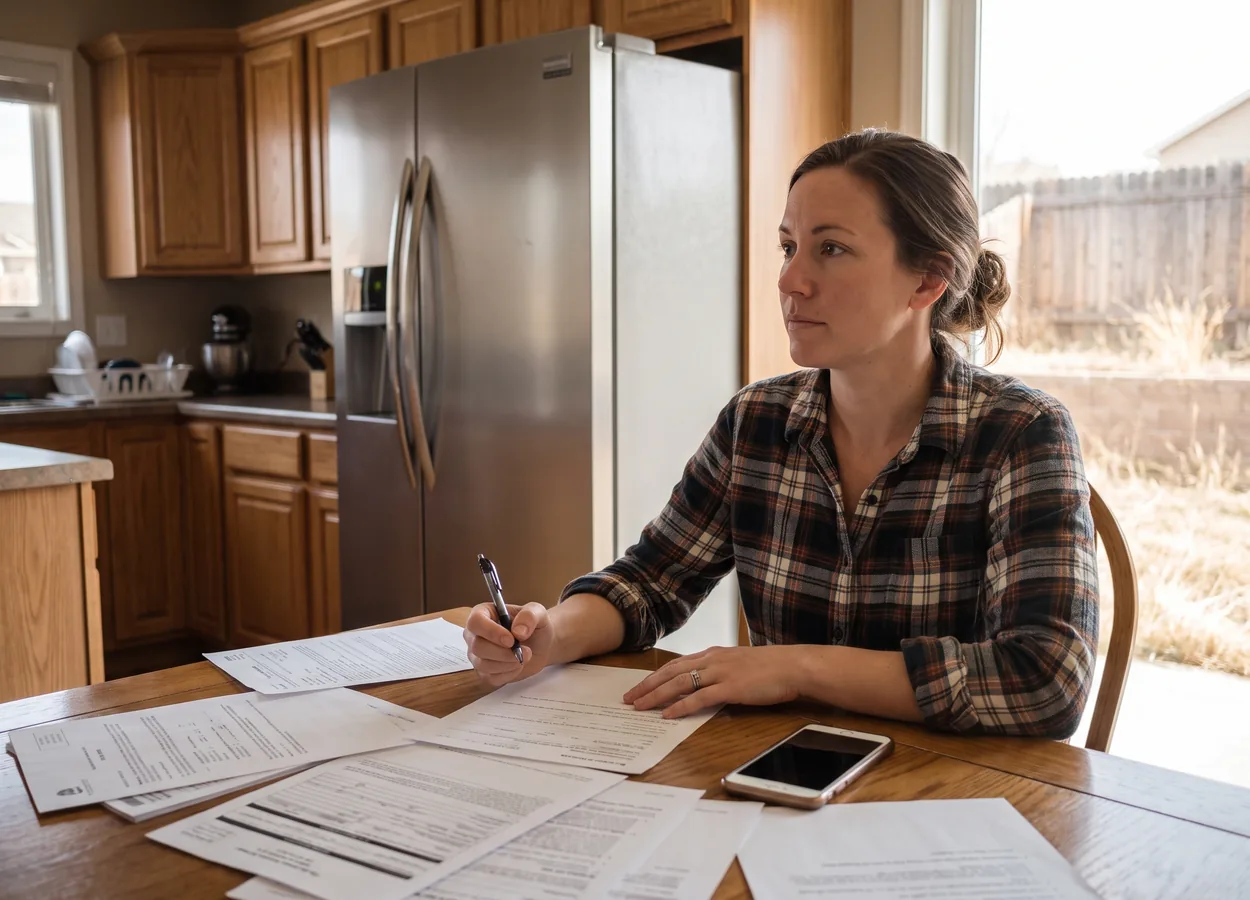
How a complaint is written affects how seriously it is reviewed. The goal is not to express anger; it is to present a clear, organized, factual account so the department can investigate the insurer's handling of the claim.
A strong complaint includes
- Your claim number and policy information
- A dated timeline of events
- A clear explanation of what happened
- Copies of supporting documents (estimates, emails, photos, denial letters, invoices)
- The specific resolution you are requesting
- Keep it professional and in chronological order
Avoid
- Emotional language
- Threats
- Unrelated personal history
- Unsupported statements
State regulators investigate facts, documentation, and claim practices, not emotions. A well-written complaint can trigger a higher-level review inside the insurer.
A simple rule: be professional, stay organized, stick to the facts, and let the documentation tell the story.
Your right to appraisal
If you believe your insurer is undervaluing your claim or refusing to pay for a full, proper repair to pre-loss condition, your policy may include an appraisal provision that lets you contest the repair cost and method. Policy language varies, but the process typically runs:
Confirm your policy includes right-to-appraisal language, often under "Damage to Your Auto."
Send a formal written demand to invoke the appraisal clause, by email or certified mail.
Select a competent, unbiased appraiser to represent you, within your policy's timeline; you pay your appraiser's fees.
The insurer selects and pays for its own competent, unbiased appraiser.
The two appraisers review the claim independently, exchange findings, and try to agree. If they cannot, they select a neutral umpire, whose fee you and the insurer share. If any two of the three agree on the loss amount, that amount is binding.
Questions, or need help finding a competent appraiser? Ask your selected shop, or contact MSCRA and we can help point you toward a licensed appraiser in your area.
Where to file
State regulatory resources
Find a shop you can trust
Knowing your rights is step one. The next is choosing a shop that will stand behind the repair. MSCRA member shops have committed to industry training, professional standards, and consumer advocacy.
Utah DOPL
Utah Division of Occupational and Professional Licensing licenses and regulates auto body shops and technicians. For complaints about a shop's conduct or quality of work.
Phone: 801-530-6601
dopl.utah.gov →Colorado DORA
Colorado Division of Insurance regulates insurance company practices including claim handling and steering practices.
Phone: 303-894-7855
doi.colorado.gov →This information is provided for general educational and consumer information purposes only and is not legal advice, insurance claim representation, or professional claim adjusting services. A state auto body association, collision repair facility, or repair professional may not provide legal advice, interpret insurance law, negotiate insurance claims on behalf of a consumer, or act as a licensed public adjuster or appraiser unless properly licensed under applicable state law. Public adjusting is regulated by state law, and only licensed attorneys may provide legal advice. MSCRA's role is limited to directing consumers toward general information, documentation practices, and available resources. Consumers seeking legal advice, claim negotiation, appraisal services, or claim representation should consult a qualified attorney, licensed public adjuster, or licensed appraiser in their state.